Quick Summary
To clean your kitchen scissors without letting them rust, rinse them in warm water after each use, gently scrub them with a soft sponge, and then dry them immediately with a dry cloth. Avoid the dishwasher and never leave the scissors soaking in the sink.
- Open the blades fully and rinse both sides as well as the hinge after each use.
- Dry immediately with a dry cloth, as residual moisture is the main cause of rust.
- Avoid the dishwasher, which combines heat, pressurized water, and harsh detergents.
- Oil the blades with food-grade mineral oil once a month to create a protective barrier.
Table of Contents
- Cleaning kitchen scissors after each use
- Disassembling kitchen scissors for a complete cleaning
- How to remove rust from kitchen scissors
- Can you put kitchen scissors in the dishwasher?
- Cleaning the scissors hinge and adjustment screws
- Oiling your kitchen scissors to prevent rust
- Keeping your kitchen scissors in good condition daily
- Frequently Asked Questions
Why your kitchen scissors rust and how to prevent it
Last updated: November 10, 2026
Your kitchen scissors rust faster than you think. A blade left damp after cutting chicken, a trip through the dishwasher, or a dirty hinge is enough to start oxidation. This question comes up often: how to clean your kitchen scissors without letting them rust, and above all, how to keep them sharp for a long time. The good news is that the method is simple. Just a few regular steps, and your pair will stay clean and smooth for years.
Rust appears when steel reacts with moisture and food residue. Stainless steel scissors resist better, but they are not immune. Carbon steel scissors, on the other hand, rust much faster. In both cases, the key reflex remains the same: never put away a damp or dirty pair.
Here are the three most common causes:
- Residual moisture after rinsing, especially in the hinge
- Acidic residues such as lemon juice, tomato, or marinade
- Dishwasher which exposes the blade to hot water and harsh detergents
Cleaning kitchen scissors after each use
Immediate cleaning makes the biggest difference. As soon as you are done cutting, separate the blades and rinse them in warm water. Scrub with a soft sponge and a little dish soap. A double-sided sponge, with its soft side, is more than enough to remove residue without scratching the metal.
Next, apply the following method:
- Open the blades fully
- Rinse both sides and the hinge area
- Scrub with the soft side of your sponge
- Rinse again to remove all detergent
- Dry immediately with a dry cloth
You can also use a little white vinegar to dissolve acidic residues. Then rinse with clean water, as vinegar left on the blade can attack the metal over time.
Warning: never leave the scissors soaking in the sink overnight. Standing water seeps into the hinge and triggers rust where you cannot see it.
Here are the steps to follow after each use, with their frequency:
| Step | What to do | Frequency |
|---|---|---|
| Separate the blades | Open the blades fully | After each use |
| Rinse | Warm water, both sides and hinge | After each use |
| Scrub | Soft side of a double-sided sponge | After each use |
| Rinse again | Remove all detergent | After each use |
| Dry | Dry cloth immediately | After each use |
Disassembling kitchen scissors for a complete cleaning
Most kitchen scissors can be disassembled, but not all. Classic pivot screw models separate easily, while welded or riveted models must remain assembled. Before handling, examine the pivot: if you see a screw with a slotted or Phillips head, disassembly is possible. If the pivot is a simple rivet, clean without separating.
For a disassemblable model, work on a flat surface covered with a cloth, so you can find the small parts. Loosen the pivot screw a quarter turn at a time, without removing it completely at first. Then separate the two branches by gently pulling them apart. The spring, when present, is the most fragile part: it can become loose or jump out. Note its mounting direction before taking it out, or photograph the assembly.
Cleaning is done piece by piece. Brush the inside of the blades with a soft toothbrush, remove the residue lodged in the contact surfaces, then pass a cotton swab lightly soaked in white vinegar through the narrow areas. Dry each element immediately with a dry cloth, as moisture trapped in the crevices is the main cause of internal rust.
Reassembly is done in reverse order. Replace the spring in its original direction, then assemble the branches and tighten the pivot screw without forcing. Test the movement: it should be smooth and regular. Side play indicates an insufficiently tightened screw; resistance at a specific point indicates residue or a poorly positioned spring.
Warning: never force disassembly if the screw resists. A rounded head or damaged thread makes reassembly impossible and requires replacing the tool.
How to remove rust from kitchen scissors
If rust is already there, don't panic. Light stains often go away with a little baking soda. Make a paste with a spoonful of baking soda and a few drops of water. Apply it to the stain with a soft cloth, scrub gently, then rinse and dry.
For more stubborn rust, soak a cloth in white vinegar and place it on the blade for a few minutes. Then scrub with a soft sponge. Avoid abrasive pads and stripping products: they scratch the steel and accelerate corrosion.
Once the rust is gone, lightly oil the blade to protect it.
Can you put kitchen scissors in the dishwasher?
The short answer: it's better to avoid it. The dishwasher combines heat, pressurized water, and powerful detergents. This mixture can dull the steel, loosen the pivot, and promote rust, especially on carbon steel models.
Some high-quality stainless steel scissors can withstand the dishwasher. Always check the manufacturer's label before putting them in. If in doubt, hand washing remains the best option. It takes less time than you think, and it protects your investment much better.
Cleaning the scissors hinge and adjustment screws
The hinge concentrates most of the problems. That's where grease, crumbs, and moisture settle. To clean it, open the blades as far as possible and slide a soft toothbrush or a toothpick into the pivot space. Remove the residue, then rinse.
The adjustment screws deserve the same attention. A little dirt in the thread can block the movement. Clean them with a fine brush, dry them, then check that the blade cuts well without play.
Oiling your kitchen scissors to prevent rust
Rust forms when oxygen and moisture reach the bare metal. A thin layer of oil creates a barrier that isolates the blade from the air and water, and that's precisely what most scissors lack after washing. A reusable oil sprayer allows you to distribute the oil finely on the blades and the hinge.
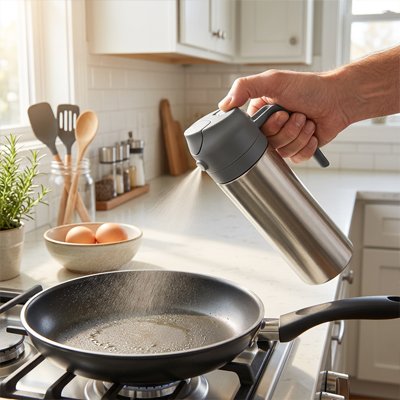
The choice of oil matters. A food-grade mineral oil, odorless and tasteless, is the most stable solution: it does not go rancid and does not stick like some vegetable oils that oxidize over time. Sunflower or rapeseed oil works as a temporary solution, but it eventually hardens in the hinge and attracts dust. Avoid WD-40 or industrial-use oils, which are not intended for food contact.
The application method makes the difference. Dry the blades and the hinge perfectly, then apply a drop of mineral oil to a dry cloth and rub both sides of the blade. For the pivot, place a very small amount directly in the axis, open and close several times to distribute, then wipe off the excess. A film that is too thick retains food particles and creates the opposite effect of what is desired.
The frequency depends on your use. A pair used daily for wet foods (poultry, seafood, fresh herbs) benefits from oiling after each wash. For occasional use with dry foods, a monthly application is more than enough.
Warning: never oil a blade that is still damp. Water trapped under the oil film accelerates corrosion instead of preventing it.
If the movement squeaks after oiling, it's often an excess of oil that has hardened in contact with residue. Clean the hinge with a dry cotton swab, then reapply a smaller amount.
Keeping your kitchen scissors in good condition daily
A few simple habits extend the life of your scissors. Store them dry, preferably in a drawer or a holder, never next to the sink. Avoid using them to cut bones, cardboard, or thick aluminum foil, which chip the blade.
To regain sharpness between cleanings, a well-used sharpening gun helps keep the blade effective. Also think about keeping a few double-sided sponges at hand to clean your scissors as soon as you finish preparing.
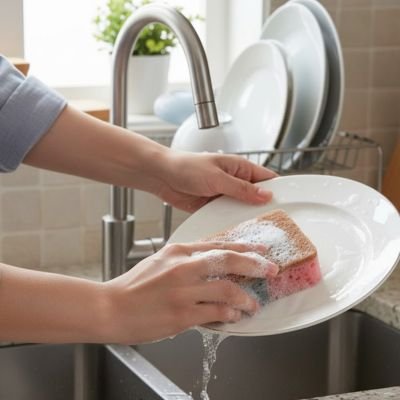
Daily, the routine consists of three steps: rinse, dry, oil once a month. It's little effort to avoid rust and keep scissors that cut cleanly.
Frequently Asked Questions
How to clean kitchen scissors after use?
Separate the blades if the model allows it, then rinse them in warm water to remove food residue. Scrub with a soft sponge and a little dish soap, focusing on the hinge area. Rinse thoroughly, then dry each blade immediately with a soft cloth. Complete drying is the best protection against rust, as residual moisture is the main cause of steel oxidation.
Can you put kitchen scissors in the dishwasher?
It is not recommended to put kitchen scissors in the dishwasher. Harsh detergents, heat, and prolonged moisture promote corrosion and can also degrade the hinge lubrication. Hand washing remains the safest method to preserve sharpness and the mechanism. After a trip through the dishwasher, careful drying and light lubrication are essential.
How to remove rust from kitchen scissors?
Start by rubbing the stains with a paste of baking soda and a little water, using a non-abrasive sponge. For more stubborn stains, a brief soak in white vinegar can help, never exceeding a few minutes. Rinse and dry immediately, then finish with a thin layer of mineral oil. Avoid metal abrasives, which create micro-scratches that promote new oxidation.
How often should kitchen scissors be oiled?
A light lubrication every four to six weeks is sufficient for regular use, and after each thorough cleaning. Apply a few drops of food-grade mineral oil to the hinge and blades, then open and close several times to spread the protective film. Wipe off the excess with a clean cloth before storing the scissors to avoid contaminating your food.