Table of Contents
- Recognizing the Signs of a Dull Blade
- The Paper Test for Knives: A Quick and Reliable Method
- The No-Pressure Tomato Test
- Why a Dull Knife Is More Dangerous
- Kitchen Knife Sharpening Frequency: When to Maintain Your Blades
- Best Professional Kitchen Knife Sharpener to Restore Sharpness
- Frequently Asked Questions
Last updated: September 29, 2026
Recognizing the Signs of a Dull Blade
A dull knife turns every preparation into a chore. Instead of slicing, the blade crushes. Food slides under the edge instead of being cut cleanly. This is the first sign that how to tell if a knife is dull is becoming an urgent question.
The signs of a worn blade are easy to spot once you know where to look. Here is what tells you that your knife needs sharpening.
Visual and Tactile Signs
Look at the blade's edge under direct light. A sharp blade shines with a fine, clean edge. A dull blade shows a white or gray line along the cutting edge, which is the flattened surface of the worn edge. This white line is called the "flat edge," and it is proof that the edge has rounded under repeated pressure.
Run your finger very lightly along the side of the blade, never along the cutting edge. A sharp blade will catch your skin slightly. A dull blade will slide without resistance. This tactile test is quick and reliable.
The cutting angle also changes. A new knife has a sharp, precise edge. With wear, the cutting edge gradually thickens. The edge becomes wider and less capable of biting into food.
Blade Performance in the Kitchen
The real test is what happens on your plate. A crushed tomato instead of a sliced one? Your knife needs sharpening. A dull blade does not cut; it compresses the food.
You have to press hard to get a cut. A good blade glides with light pressure from the wrist. If you have to put your whole weight into slicing, the edge has lost its bite.
Fruits and vegetables tear rather than being cut cleanly. Herbs are chewed instead of being finely chopped. Meat tears into fibers rather than being sliced into even pieces. All these signs point to the same problem: your blade needs sharpening.
Why Dullness Varies by Steel Type
An often-overlooked detail: the rate of dulling depends heavily on the type of steel in your knife. This difference explains why two knives used in the same way do not dull at the same rate.
Japanese steels (typically between 60 and 65 HRC in hardness) are very hard and retain their sharpness for a long time. A Japanese knife can stay sharp two to three times longer than a European knife. However, when it dulls, the edge gradually rounds, and the visual signs are subtle. The paper test becomes critical for detecting early dullness.
European steels (typically between 54 and 58 HRC) are softer and dull faster, but the dullness is often more visible and easier to detect. The edge flattens quickly, creating that characteristic white line. In return, sharpening is simpler and faster.
The practical impact: if you own a Japanese knife, expect a longer lifespan between sharpenings, but stay vigilant with the paper test. If you have a European knife, the dullness will be more obvious, but maintenance will be more frequent.

The Paper Test for Knives: A Quick and Reliable Method
The paper test for knives is the simplest method for assessing sharpness. Take a regular sheet of white paper and hold it vertically between your fingers.
Place the blade on top of the paper and let it slide under its own weight. A sharp blade cuts through the paper effortlessly. It creates a clean, precise cut. A dull blade slips on the paper or tears it without actually cutting it.
This test takes ten seconds. No special equipment is needed. This is the test professional chefs use daily to check their knives before service.
A quicker variation: cut a newspaper sheet in half. A sharp blade creates a clean cut. A dull blade crushes or tears the paper instead of slicing it. The result is immediate and unambiguous.
The No-Pressure Tomato Test
The tomato is the ultimate test of sharpness. Take a ripe tomato with thin skin and place it on a cutting board. A sharp blade penetrates the skin with light pressure from the wrist, almost effortlessly.
The tomato test reveals everything. A good blade creates a clean cut. The flesh remains intact, and the juice does not escape. You get an even, clean slice.
A dull blade crushes the tomato. The skin gives way, but the flesh is crushed under the pressure. The juice squirts everywhere. You get pulp instead of a slice.
The secret: do not force it. Let the blade do the work. If you have to press hard, your knife is dull. It is as simple as that.
This test works because the tomato combines tough skin with delicate flesh. A sharp blade cuts through the skin without damaging the flesh. A dull blade does not have enough bite to pierce the skin without crushing the fruit.
Why a Dull Knife Is More Dangerous
This is the paradox that many do not understand: a dull knife is more dangerous than a sharp knife.
A sharp knife requires little pressure. You control every movement. The blade does exactly what you ask it to do. The risk of slipping is minimal.
A dull knife requires force. You press hard to get a cut. Your hand gets tired. Your control decreases. The blade slips easily on wet or greasy food. When it slips, it slips quickly and far, directly toward your fingers.
Serious accidents in the kitchen often come from knives that are dull. The blade escapes the chef's control and injures the hands or fingers. A sharp knife demands respect, but it is predictable. A dull knife is unpredictable.

Food safety begins with a sharp knife. It is an investment in your daily well-being.
Kitchen Knife Sharpening Frequency: When to Maintain Your Blades
The kitchen knife sharpening frequency depends on your usage. A chef's knife used daily needs sharpening every two to four months. A less-used paring knife can wait six months.
The signs tell you better than the calendar. When the paper test fails, it is time to sharpen. When the tomato is crushed, it is time to sharpen.
Regular maintenance prevents excessive wear. A very dull knife requires more work from the sharpener. A slightly worn knife regains its sharpness in a few passes.
The Decisive Impact of the Cutting Surface
An often-forgotten factor accelerates or slows dullness far more than the frequency of use: the choice of your cutting board.
Wooden cutting boards (oak, maple, bamboo) are the best for your knives. Wood is slightly flexible and absorbs the impact of the blade. The edge remains intact longer. A knife used daily on a wooden board can stay sharp for three to four months.

Plastic cutting boards moderately accelerate dullness. Plastic is harder than wood and offers less flexibility. Each cut creates a micro-impact that gradually rounds the edge. The same knife on plastic dulls in two to three months.
Glass or marble cutting boards are the worst for your knives. These surfaces are extremely hard and do not give at all. Each cut is a direct shock that flattens the edge. A knife used on glass dulls in four to six weeks. Absolutely avoid glass and marble if you want to keep your knives sharp.
The practical implication: if you use a glass board, you will sharpen two to three times more often than with a wooden board. The cost in time and knife wear is enormous. Investing in a good wooden board saves months of sharpening.
Daily Care: Habits That Prolong Sharpness
Sharpening is only half the story. Daily care prevents premature dullness.
Hand washing is mandatory. The dishwasher is the enemy of sharpness. Hot water, impacts against other utensils, harsh detergents—all of this damages the edge. Always wash your knife by hand, immediately after use, with a soft cloth.
Dry immediately. Do not leave your knife soaking or air-drying. Prolonged moisture promotes corrosion and oxidation, which weaken the edge. Dry it immediately with a clean cloth.
Protected storage. A knife stored loosely in a drawer dulls quickly by striking other objects. Use a knife block, a wall-mounted magnetic strip, or blade guards. Every avoided impact prolongs the life of the edge.
Light weekly honing. Between full sharpenings, a quick pass on a honing rod or fine sharpener once a week maintains the edge.
Difference Between Honing and Sharpening
Many people confuse these two terms. They do not mean the same thing.
Best Professional Kitchen Knife Sharpener to Restore Sharpness
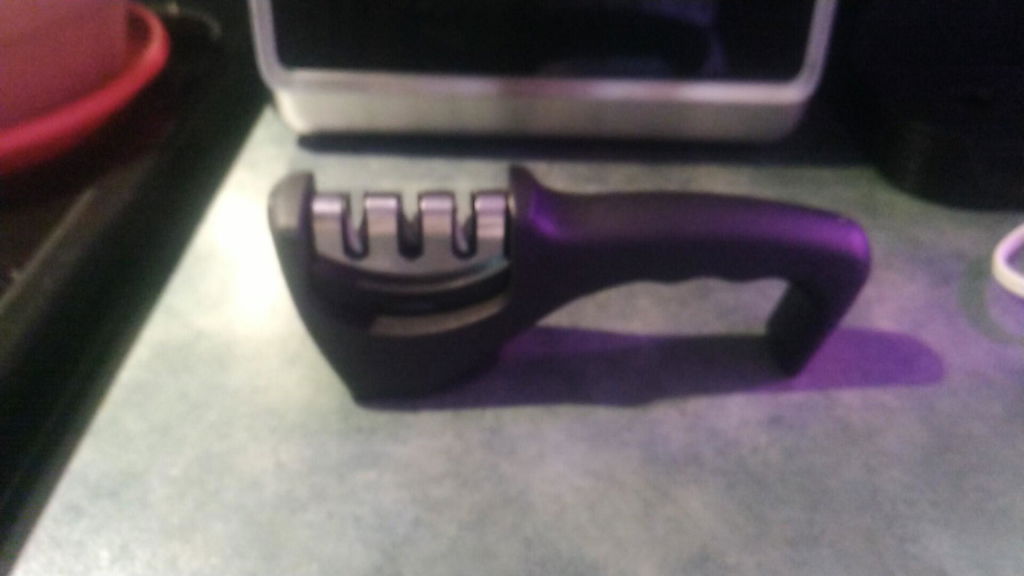
When you are ready to sharpen, the choice of tool matters. Hell-kitchen-equipment offers several sharpeners designed to quickly restore sharpness.
Frequently Asked Questions
What is the most reliable test to check if a knife is dull?
The paper test remains the most reliable. Take a sheet of white paper and slide the blade vertically. A sharp knife cuts it cleanly in a single pass, while a dull knife tears it or slips on it. The tomato test completes this check: a sharp blade penetrates the skin without crushing, while a dull blade crushes it.
How often should you sharpen your kitchen knives?
For daily use, sharpen your knives every 2 to 3 months. Occasional use (2-3 times a week) requires sharpening every 6 months. Regular honing on a rod between sharpenings maintains the blade's edge. Observe your knife's performance: as soon as it crushes rather than slices, it is time to sharpen.
Why is a dull knife more dangerous than a sharp knife?
A dull knife requires greater cutting force. This extra pressure increases the risk of slipping on the food, which causes injuries. A sharp knife cuts precisely and effortlessly, reducing accidents.
What is the difference between sharpening and honing?
Sharpening restores the edge of a dull blade using a whetstone or a knife sharpener. Honing maintains the edge between sharpenings with a honing rod or sharpening steel, without removing any material. Think of sharpening as a major repair and honing as regular maintenance. Combining the two extends the life of your knives.