Table of Contents
- Required Equipment and Appropriate Tools
- Basic Knife Skills in the Kitchen
- Posture and Body Positioning
- How to Sharpen Your Knives for a Clean Cut
- Kitchen Safety: Essential Protective Techniques
- Common Mistakes to Avoid
- Ergonomics and Preventing Musculoskeletal Disorders
- Frequently Asked Questions
Last updated: September 27, 2026
Required Equipment and Appropriate Tools
To learn how to cut properly, you first need the right tools. A poorly sharpened or unsuitable knife turns every cut into a frustrating struggle. The right equipment depends on your skill level: investing in professional tools too early can be wasteful, but ignoring quality will hinder your progress.
Tools for Beginners: Building Good Habits
To get started, an entry-level stainless steel knife with a 20-centimeter blade is sufficient for mastering basic techniques. The important thing is that the blade is factory-sharpened and the handle is comfortable without causing fatigue.
A stable cutting board made of hardwood or food-safe plastic is essential. Wood absorbs impact and preserves the blade's edge better than glass or marble. Avoid lightweight boards that slide.
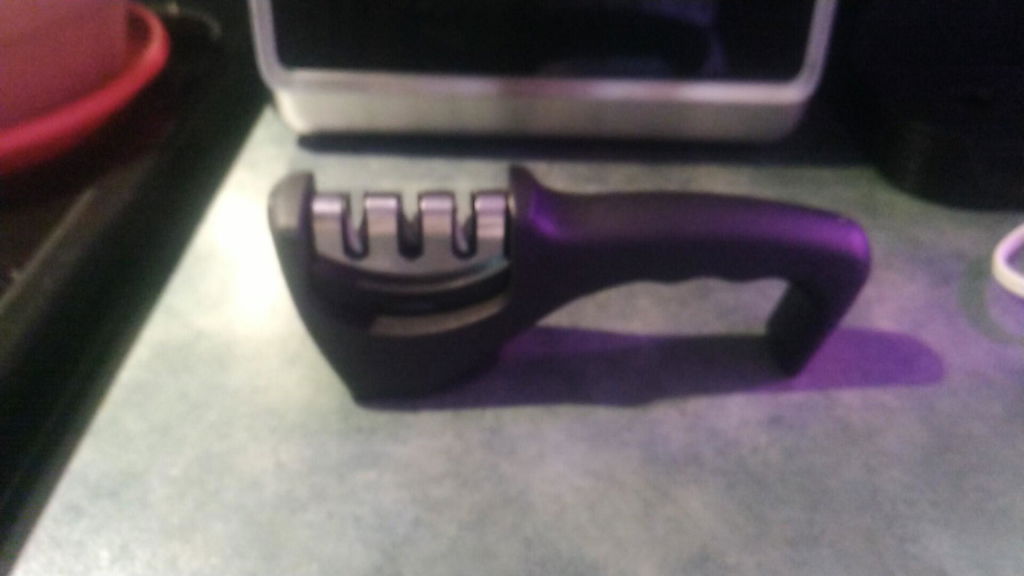
A simple two-step manual sharpener is sufficient for beginners. Simply slide your blade into the guide, and the job is done in 30 seconds. It is the best investment for a beginner, as a regularly maintained knife remains effective for a long time.
Tools for Progress: When to Invest More
After three to six months of regular practice, an intermediate-quality knife made of high-quality stainless steel or carbon steel offers better balance and superior edge retention. A traditional Japanese knife (gyuto or santoku) combines lightness, precision, and durability.

A professional double-sided whetstone offers a finer and more controlled sharpening than a manual sharpener. It requires a little practice but provides a level of precision that simple sharpeners cannot match.
Professional Tools: For Enthusiasts
For daily or professional use, a high-end knife made of carbon steel or premium stainless steel justifies the investment.
Universal Criteria for All Skill Levels
Three criteria remain non-negotiable: (1) Factory sharpness: test it on a tomato; the blade should cut through without crushing. (2) Balance: the balance point should be near the handle, not at the tip of the blade. (3) Handle stability: the handle should not move on the blade.
A dull knife, regardless of its original price, becomes dangerous and useless. Regular sharpening is therefore more important than the brand or initial price. An entry-level knife that is regularly sharpened outperforms a neglected premium knife.
Basic Knife Skills in the Kitchen
Learning to cut properly begins with mastering three fundamental techniques: the straight cut, the brunoise, and fine cuts.
The Straight Cut: Fundamental and Precise
The straight cut is your starting point. It seems simple, but it immediately reveals your knife skills and posture.
Hold your knife with a firm but relaxed grip. Your index and middle fingers guide the blade while remaining in contact with the flat side, while your thumb folds back to avoid cuts. The movement comes from your wrist and forearm, not your fingers. The blade descends perpendicular to the cutting board.
Consistency depends on three factors: the stability of your cutting board, the precision of your guiding, and, above all, the sharpness of your blade. A sharp blade glides without force. A dull blade forces you to apply pressure, creating unintended angles and uneven thicknesses.
Brunoise and Fine Cuts
The brunoise is an advanced cut: uniform cubes measuring 1 to 3 millimeters. You begin by slicing your vegetable into thin sticks, then cut them perpendicularly to create the cubes.
Your fingers form a claw: the knuckles remain forward, creating a barrier against which the blade rests lightly. This allows you to maintain a consistent thickness while keeping your fingers at a safe distance. This technique requires practice but eventually becomes automatic.
For fine cuts such as lemon slices or chopped herbs, use a rocking motion: the tip of the knife remains in contact with the cutting board while the heel moves up and down. This fluid motion, repeated quickly, creates thin, uniform slices without excessive effort.
Japanese Knife | Ultra-Sharp →
Posture and Body Positioning
Your posture determines your endurance and precision. Poor positioning creates tension in your shoulders and wrist, resulting in imprecise movements and rapid fatigue.
Stand facing your work surface with your feet shoulder-width apart. Your upper body should lean slightly forward. Keep your elbows close to your body. Hold the knife with a natural grip: neither too tight nor too loose.
Your cutting board should be at elbow height. This height reduces strain on your back and arms.

Your shoulders should be parallel to the work surface. After thirty minutes of work, you should feel no pain, only slight muscle fatigue.
How to Sharpen Your Knives for a Clean Cut
A dull knife is dangerous. Regular sharpening is an absolute priority. There are two approaches: maintenance sharpening (restores the edge of a slightly dull blade) and regular sharpening (completely restores the blade's geometry).
Regular Sharpening versus Maintenance Sharpening
Maintenance sharpening takes thirty seconds with a manual sharpener and restores the edge without removing much material. Regular sharpening is done with a whetstone or a professional roll sharpener once or twice a month, depending on your usage.

Never let your knife become completely dull. A slightly dull knife can be restored in a few passes. A very dull knife requires much more work and results in greater material loss. Regular sharpening ensures your knife remains effective for years.
Kitchen Safety: Essential Protective Techniques
Safety begins with respecting the knife. It is a powerful tool that requires concentration and constant attention.
Your hand holding the vegetable should form a claw: fingers curled, knuckles forward, creating a physical barrier against the blade. This position protects your fingers while allowing you to control the thickness. Never keep your fingers extended or flat.
Your hand holding the knife must remain stable and controlled. A fluid, regular motion ensures safety.
Your work surface should be clean and dry. Stabilize your cutting board with a damp cloth underneath if it slides. Put your knife away immediately after use.
Focus on your task. Distraction is the leading cause of accidents. Do not use your phone or engage in intense conversation while cutting. Give your full attention to the movement and the position of your blade.
Common Mistakes to Avoid
Cutting mistakes are diagnostic signals. Learning to identify and correct these errors in real time will accelerate your progress.
Quick Diagnosis: Identifying the Problem
Your cut crushes instead of slicing
Most likely cause: your knife is dull. Test it on a tomato without applying pressure. If the blade crushes the skin, sharpen your knife. Second cause: you are applying too much pressure. A light sawing motion with a sharp blade is more effective than strong downward pressure.
Your slices are uneven in thickness
Japanese Knife | Ultra-Sharp →
Cause: Your hand holding the vegetable is not maintaining a stable position. Slow down and check that your claw hand is properly positioned before each cut. Second cause: your cutting board is moving. Stabilize it with a damp cloth underneath.
Your wrist or forearm tires quickly
Cause: Your posture is not neutral. Check that your work surface is at elbow height, that your wrist is straight, and that your grip is not too tight. Second cause: you are working too long without a break. After 30 minutes, take a 2- to 3-minute break.
Your blade slips or skids on the vegetable
Cause: The vegetable is too wet. Dry it before cutting. For round vegetables, cut a thin slice off one side first to create a flat surface. Second cause: your blade is not sharp enough. Sharpen it.
You cut yourself or are afraid of cutting yourself
Cause: Your hand is not in a claw position.
Step-by-Step Troubleshooting: Correcting and Improving
If your first cut is unsuccessful
Use it to diagnose the problem. Examine the cut surface: is it crushed, uneven, or smooth? Correct one factor at a time and try again.
If you are progressing slowly
If your knife breaks or rusts
Ergonomics and Preventing Musculoskeletal Disorders
Learning to cut properly also means learning to protect your body.
Frequently Asked Questions
Which knife should I choose to learn how to cut properly?
A versatile chef's knife or an ultra-sharp Japanese knife is perfect for beginners. The important thing is that the blade is sharp and the handle fits your hand well. A good knife reduces the force required and improves precision. An ultra-sharp Japanese knife, for example, glides effortlessly thanks to its hammered textured blade, which reduces food adhesion and makes learning much easier.
How can I achieve a perfectly straight cut every time?
The key lies in three elements: a well-sharpened blade, a stable posture, and a regular motion. Lightly trace a cut line with the tip of the knife, hold your cutting board firmly, and use a guide (your free hand holding the food) to ensure proper alignment. Practice on firm vegetables such as carrots. With a multi-step manual sharpener, you can keep your knife sharp in thirty seconds between recipes.
How often should I sharpen my knives?
Regular maintenance depends on your usage. For daily cooking, sharpening every two to three months is sufficient. However, you will notice that your knife crushes tomatoes instead of slicing them cleanly well before that: this is the sign that it needs sharpening. A wooden roll sharpener with a 15° angle or a multi-stage manual sharpener allows you to perform this task quickly at home, without calling a professional.
What are the most important safety risks in the kitchen?
The two major risks are a slipping hand and a knife that slips. Always keep your cutting board on a stable surface, keep your guiding hand in a claw position (fingers folded), and never press down hard on the blade. A well-sharpened knife is safer than a dull knife, as it requires less force and offers better control. Always work at a controlled speed, never in a hurry.