Quick Summary
The advantages of cordless hand mixers lie first in freedom of movement: no outlet or cable to deal with, and easier storage. However, their power depends on the motor and battery, and the actual battery life varies depending on the density of the preparation.
- A cordless mixer runs on a rechargeable battery, with no cable to deal with during preparation.
- The stated battery life is measured at medium speed on a light preparation, so it actually decreases.
- Dense preparations like cookie dough put a heavy strain on the motor and drain the battery faster.
- Whisking egg whites and creams are the uses where the cordless mixer proves most pleasant.
- For frequent thick doughs, a stand mixer remains more suitable than a hand mixer.
Table of Contents
- Corded or cordless hand mixer: what really changes in the kitchen
- Freedom of movement and everyday handling
- Actual battery life of a cordless mixer depending on the recipe and speed
- Power and limitations on thick preparations
- Whisking egg whites with a cordless mixer
- How to choose a cordless electric mixer suited to your kitchen
- Going cordless: what to check before buying
- Frequently Asked Questions
Advantages of cordless hand mixers: a practical guide
Last updated: November 13, 2026
Corded or cordless hand mixer: what really changes in the kitchen
The advantages of cordless hand mixers are distinguished first by one simple thing: you are no longer tied to an outlet. This gain in freedom justifies the interest in this type of appliance. The question is therefore not just "which motor?", but "how will I use it daily?".
A corded mixer remains plugged into the mains, which requires staying near an outlet and managing the cable during preparation. The cordless model, on the other hand, runs on a rechargeable battery: you take it, you put it down, you store it without hassle. This difference seems minor on paper, but it changes the way you cook a lot.
One point to keep in mind: power depends on the motor and the battery, not just on being cordless. A well-designed cordless model can whip cream without difficulty, while a cheap model will quickly show its limits. So compare the actual specifications before deciding.
Freedom of movement and everyday handling
Freedom of movement is the most concrete advantage. You can work directly above the salad bowl, tilt the container, or whisk in a saucepan without worrying about the length of the cable. For preparations that require attention, such as an emulsified sauce or pancake batter, this handling makes the movement much easier.
Handling also depends on the weight and balance of the appliance. A cordless mixer incorporates the battery into the body, which can make it heavier than an equivalent corded model. Hold it in your hand before buying if you whisk for a long time, because wrist fatigue quickly becomes a real criterion.
Another often underestimated advantage: storage. Without a cable to wind up, the mixer fits in a drawer or on a utensil holder. In a small kitchen, this is a compelling argument.
Actual battery life of a cordless mixer depending on the recipe and speed
The battery life displayed on the product sheet is a laboratory value: it is measured at medium speed, on a light preparation, and often without pauses. In the kitchen, three factors vary the actual consumption: the selected speed, the density of the preparation, and the actual operating time. A thick dough requires more torque than a liquid cream, which can drain the battery faster.
To provide useful benchmarks, you need to think in task profiles rather than generic minutes. Here is how to classify your usual preparations:
- Light and short tasks: whipped cream, egg whites, mayonnaise, fluid pancake batter. These are the uses where the actual battery life is closest to the announced battery life, because the motor works at moderate torque and for short sequences.
- Light but long tasks: pastry cream, cake batter, frosting. The duration is longer, but the load remains moderate; the battery life depends mainly on the cumulative time.
- Dense and short tasks: thick cookie dough, cold butter-sugar mixture. The required torque is higher, the battery drains faster per minute of use.
- Dense and long tasks: brioche dough, bread dough, preparation rich in cold butter. This is the most unfavorable case: the motor heats up, the speed drops, and the consumption per minute is maximum.
Warning: never compare the battery life of two models without checking the speed at which it was measured; a value announced at slow speed is not comparable to a value announced at high speed.
To anticipate your actual use, proceed in steps. To keep your stainless steel utensils in good condition after these preparations, consult our guide on maintaining stainless steel pans. Time your usual recipes, note the speed used and the number of pauses. If you work with dense doughs, allow for a margin: the useful duration can be significantly lower than the displayed value.
One methodological point: the battery capacity (in mAh or Wh depending on the models) gives an indication, but it is not enough on its own. The motor efficiency, the number of speeds, and the quality of the reducer also influence consumption. Two devices of the same capacity can therefore have different actual battery lives on the same recipe.
Finally, the battery life decreases with the age of the battery, because a lithium-ion battery loses capacity over charging cycles.
The table below summarizes the actual battery life depending on the type of preparation.
| Type of preparation | Motor strain | Actual battery life |
|---|---|---|
| Whipped cream, egg whites, mayonnaise | Light and short | Closer to the announced battery life |
| Pastry cream, cake batter, frosting | Light but long | Depends on the cumulative time |
| Thick cookie dough, cold butter-sugar | Dense and short | Drains faster per minute |
| Brioche dough, bread dough | Dense and long | Most unfavorable case |
Power and limitations on thick preparations
The power of a cordless hand mixer is not limited to a value in watts. What matters in the kitchen is the torque available at low speed and the motor's ability to maintain it without overheating. On a thick preparation, the motor must exert a lot of effort on each turn; if it does not have enough torque, the speed drops, the appliance slows down, and the battery drains faster.
Cordless models almost all incorporate a thermal protection: when the motor overheats, the appliance automatically stops to prevent deterioration. This is not a defect, but a sign that you have reached the usage limit. Repeated stopping on the same recipe indicates that the preparation is too dense for the appliance, not that it is broken.
To classify your recipes according to the motor strain:
- Suitable without reservation: creams, egg whites, mayonnaise, fluid cake batters, pancake batter. The motor works at moderate torque and the duration remains short.
- Suitable with vigilance: cookie dough, butter-sugar mixture, thick pastry cream. Incorporate the ingredients gradually and take pauses.
- To avoid or reserve for small quantities: brioche dough, bread dough, preparation rich in cold butter. The required torque often exceeds the capabilities of a hand mixer, corded or not.
Warning: never force the appliance by maintaining maximum speed on a resisting dough; you are straining the motor and the battery beyond their nominal rating and shortening their lifespan.
A few gestures reduce the strain without changing equipment. Incorporate the solids (flour, butter) in several times rather than all at once. Use the lowest speed that moves the mixture, not the highest. Take a pause as soon as the appliance slows down or heats up. Reduce the quantity per batch if the recipe allows.
If your thick preparations are frequent, a stand mixer remains more suitable: it is designed to transmit a high torque over time. The cordless hand mixer, on the other hand, excels on light tasks and moderate volumes, and it is in this use that it delivers the best ratio between freedom of movement and performance.
Whisking egg whites with a cordless mixer
Egg whites are one of the uses where the cordless mixer proves most pleasant. All it takes is a good sustained speed and a very clean bowl, without grease, to obtain a firm foam in a few minutes. The freedom of movement also allows whisking by turning around the bowl.
A few settings make the difference. Start at medium speed to incorporate air, then increase gradually. A stainless steel or glass bowl, well degreased, gives better results than a plastic bowl that retains traces of grease. The whipped whites stabilize better if you add a pinch of sugar along the way.
Finally, make sure not to overheat the motor for a long time. If you feel the appliance heating up, take a pause before resuming.
How to choose a cordless electric mixer suited to your kitchen
The right choice depends on your habits. For occasional use, a light model with enough battery life for a few recipes is enough. For regular use, look at the battery capacity and the number of speeds.
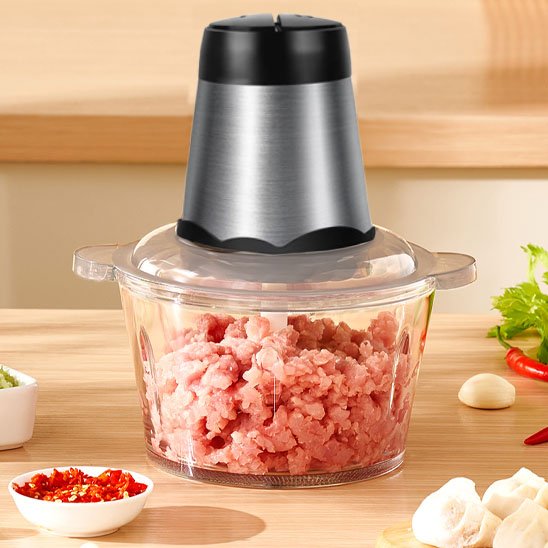
You can also compare the accessories provided: whisks, kneading hooks, and their compatibility. An appliance that accepts several accessories saves you from buying a second one for different uses. To complete your equipment, our selection of powerful electric choppers meets neighboring preparation needs.
A simple grid to decide:
- Occasional use, light preparations: compact model, standard battery
- Regular use, whites and creams: higher capacity battery, several speeds
- Frequent thick doughs: rather choose a stand mixer
Keep in mind that the price depends on the quantity, the models, and the delivery. Consult the Hell-kitchen-equipment website for current prices.
Going cordless: what to check before buying
Before taking the step, check four points. The first is the battery life on your actual recipes, not on the product sheet. The second is the compatibility of the batteries with other devices in the range. The third concerns the weight and the grip, to be tested if possible. The fourth is the warranty and the battery replacement conditions.
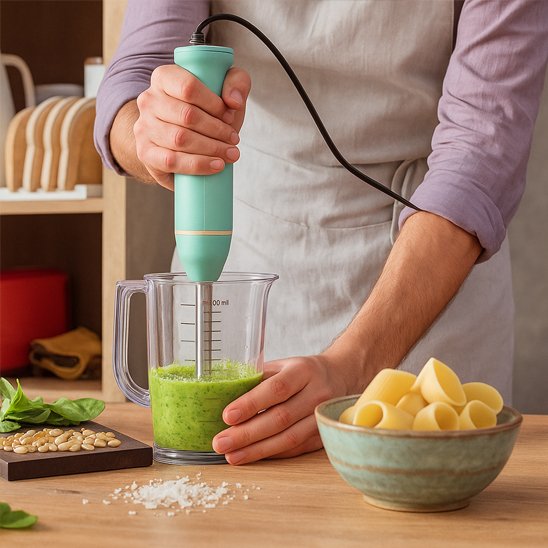
If you still hesitate between two approaches, a powerful and versatile immersion blender can also meet certain liquid preparation needs, to be used in addition to the mixer.
In all cases, a cordless mixer brings real flexibility to everyday life provided it is chosen for the use you make of it. Take the time to compare, and invest in the model that covers your usual recipes.
Frequently Asked Questions
What are the advantages of a cordless hand mixer?
The main advantage of a cordless hand mixer is freedom of movement: no cable that limits the movement or that bothers when working above a salad bowl placed on the countertop. It stores more easily, it does not require looking for an outlet nearby, and it is well suited to small kitchens. Its battery life is sufficient for most common preparations, provided you choose the model well and monitor the battery charge before starting a long recipe.
Is a cordless mixer as powerful as a corded model?
Generally, no: at comparable power, a cordless model must house a compact battery and motor, which limits the available torque. For whipping egg whites, cream, or cake batter, the difference is rarely noticeable. However, with a thick dough such as brioche dough or a very dense mixture, a corded model remains more capable and heats up less. Check the stated power and test the model on the preparation you are most interested in.
Can a cordless mixer whip egg whites?
Yes, a cordless hand mixer whips egg whites properly, provided you use a clean and dry bowl, free of any traces of egg yolk or grease, and start at a moderate speed before speeding up. For a good whip, it often takes several minutes and a sufficiently charged battery. Small quantities of egg whites are the easiest to succeed with this type of appliance.
How to choose a cordless electric mixer?
Start by checking the power, the number of speeds, and the presence of a removable battery, which makes replacement or storage easier. Then look at the weight and grip, as an appliance that is too heavy will tire you out quickly during long preparations. Compare the stated battery life with the recipes you make most often, and make sure that the included accessories match your needs.